Combine our range of drone testing equipment to build your ideal environment.
1
Distributed Electric Propulsion Lab
Combine multiple Flight Stands to test up to eight propulsion systems simultaneously. Replicate distributed electric propulsion architectures, evaluate mission profiles, and generate synchronized performance data across all powertrains.
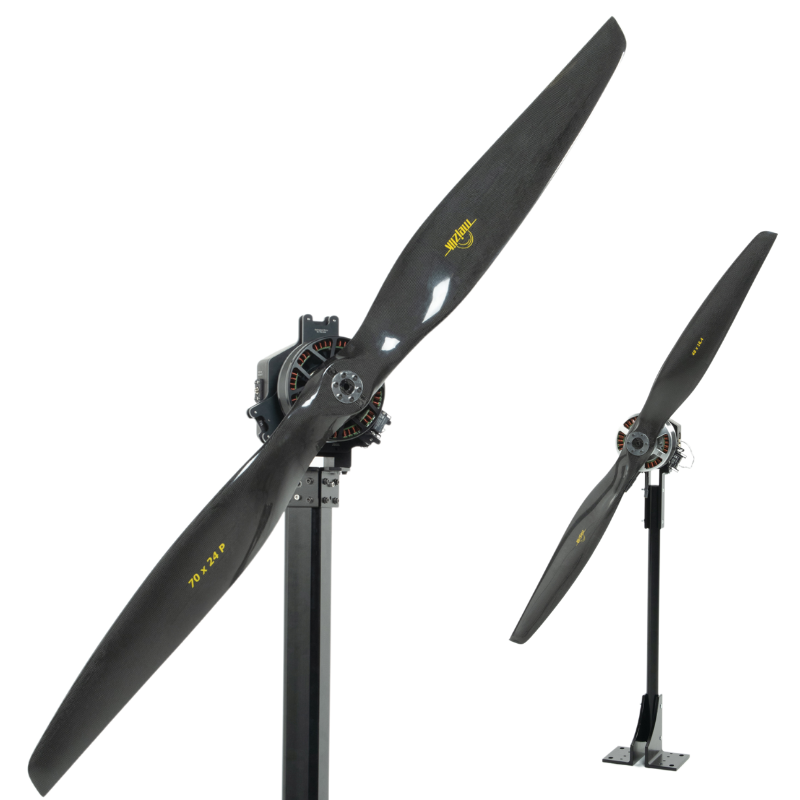
Validate motor-propeller performance with accurate measurements of thrust, torque, RPM, power, efficiency, vibration, and more. Compare propulsion combinations and generate data to support component selection and design optimization.
Evaluate propulsion systems under realistic airflow conditions using an open wind tunnel. Quantify the effects of wind speed on thrust, efficiency and overall flight performance.
Measure aerodynamic losses, map airflow, and evaluate propulsion performance under crosswinds, gusts, and turbulence.
Visualize airflow around propellers, aircraft, and components using smoke to better understand flow patterns, wake interactions, and aerodynamic behavior during testing.
Simulate rainfall conditions to evaluate propulsion system performance and reliability in wet environments. Assess water exposure effects on motors, propellers, and position-holding capability.
Evaluate scale models in a controlled airflow environment. Perform lift and drag analysis, study boundary layer development, visualize airflow, simulate environmental effects, and characterize motor and propeller performance.
Evaluate icing losses and anti-icing effectiveness by testing propulsion systems under controlled icing conditions. Measure performance degradation and assess operation in cold-weather environments.
Control and monitor testing using Flight Stand, WindControl, and WindVision software. Automate test sequences, synchronize data acquisition, and visualize and analyze test results in real time.
Characterize and validate gas engine performance under real operating conditions. Measure thrust, torque, RPM, fuel flow, temperatures, and vibration to compare engines, optimize carburetors tuning, and more throughout the operating range.