

 Back to Blog
By Ehab Mokhtar
Measuring wind flow accurately often starts with point measurements, but understanding how the flow behaves across space requires a different approach.
A 5-hole pressure probe makes it possible to capture both wind speed and direction, and when combined with position tracking and real-time visualization, those measurements can be assembled into a full flow field.
This article explains how a 5-hole probe is used for wind flow measurement and flow field mapping, using the WindProbe 3D as a practical example.

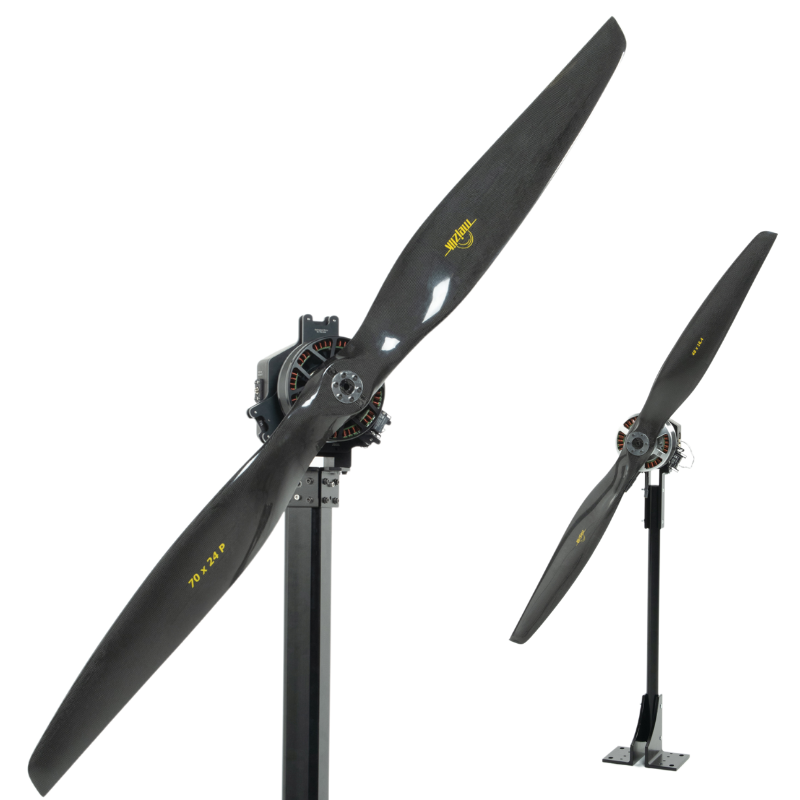
Figure 1: WindProbe 3D mapping flow field around a UAV propeller
Table of Contents
-
What is Wind Flow Mapping
-
How Multi-Hole Pressure Probes Work
-
Wind Flow Measurement System: WindProbe 3D
-
Tips for Higher Quality Flow Maps
-
Other Wind Flow Measurement Systems
What is Wind Flow Mapping
In wind flow measurement, flow field mapping refers to measuring wind velocity and direction across a region of space using a sensor such as a 5-hole pressure probe. Rather than capturing isolated point measurements, the objective is to reconstruct how the flow behaves spatially, either on a plane or throughout a 3D volume.
This approach is commonly used to:
-
Characterize wakes and flow interactions
-
Compare experimental data with CFD results
-
Measure wind speed and direction distribution
-
Identify flow behaviour around an aerodynamic object
Recommended article: Wind Tunnel Testing Options in 2026 (Compared)

Figure 2: Wind flow mapping UI in the WindVision software
How Multi-Hole Pressure Probes Work
A multi-hole pressure probe measures pressure at multiple ports arranged around the probe tip. From these pressures, the local flow velocity and direction can be determined, providing a full velocity vector at each measurement point.
Multi-hole probes are well suited for wind flow measurement because they:
-
Measure both wind speed and flow direction
-
Don’t require perfect alignment between the probe tip and direction of the flow
-
Offer a compact solution for measuring flows around objects
When combined with position tracking, each 5-hole probe measurement can be tracked precisely, enabling:
-
Easy repositioning during scanning
-
Dense spatial sampling without mechanical traverses

Wind Flow Measurement System: WindProbe 3D
WindProbe 3D is a wind flow measurement and visualization system built around four coordinated elements:
-
5-hole pressure probe: Measures pressure, velocity, and flow direction
-
Motion capture system: Tracks the probe’s position and orientation in 3D space
-
WindShaper wind wall: A modular array of individually controlled fans that generates repeatable and programmable wind flows
- WindVison software: synchronizes these data streams and displays the resulting wind flow in real time as a 3D flow field.

Measurements can be recorded for later analysis, exported for post-processing, or compared directly with CFD data.
Recommended for you: How Thrust Declines with Increasing Wind Speed

Figure 5: Motion tracking camera system
High-level workflow
-
Set the desired wind condition using the WindShaper wind wall.
-
Confirm the 5-hole probe and motion tracking system are connected.
-
Zero the probe before data acquisition.
-
Define the measurement volume and voxel resolution.
-
Move the probe through the region of interest to collect data.
-
Review coverage and rescan areas as needed.
-
Export the measurement data for analysis.
System setup considerations
The WindProbe 3D system is designed for ease of use and rapid deployment:
-
The 5-hole probe arrives pre-calibrated and CE marked
-
A single USB cable provides power and data communication
-
The standard velocity range is 2–20 m/s, with other ranges available
- Position markers must be positioned and calibrated before the first test
- The measurement volume must be defined
Measurement volume and voxel resolution
The measurement volume defines where wind flow data is collected. The WindVision software divides the measurement volume into voxels, which determine spatial resolution:
-
Smaller voxels resolve finer flow structures
-
Larger voxels reduce acquisition time but smear details
Voxel size should match the scale of the flow features being measured.

Figure 6: Setting voxel resolution in the WindVision software
Data types and exports
Data can be exported from the WindVision software in one of two formats: CSV and VTK.
Raw measurement data (CSV):contains time-stamped wind velocity measurements with spatial coordinates. This format is useful for:
-
Custom processing and filtering
-
Time-based analysis
-
Reprocessing with different voxel settings
Flow field data (VTK)
Voxel-averaged flow field data is exported in VTK format, suitable for:
-
3D visualization and slicing
-
CFD comparison
-
Data sharing and collaboration
Tips for Higher Quality Flow Maps
-
Focus on regions with strong flow gradients: Spend more time in wakes and shear layers.
-
Use smooth probe motions: Multiple passes increase samples per voxel.
-
Maintain proper probe alignment: Keep the 5-hole probe within its acceptance angle.
-
Select the correct configuration: Match probe tip and velocity range to the test conditions.
Further reading: How a WindShaper Works
Other Wind Flow Measurement Systems
Flow field mapping is possible with traditional wind measurement tools, but generating spatially resolved data typically requires point-by-point measurements and additional infrastructure.
Two of the leading traditional approaches are described below.
Robotic or traverse-based measurements
This approach involves mounting a wind sensor, such as a multi-hole probe or hot-wire anemometer, on a robotic arm, linear rail, or traverse system.
This method typically requires:
-
Defining every measurement point in advance
-
Precisely moving the sensor to each location
-
Stopping at each point to acquire data
While this can provide good positional accuracy, it comes with tradeoffs:
-
High cost and setup complexity from robotic or rail systems
-
Long acquisition times due to stop-and-measure operation
-
Limited spatial resolution to keep test durations reasonable
-
Fragmented datasets that require manual spatial assignment in post-processing
Manual handheld or stand-based measurements
Another approach is to move the sensor manually, either by hand or using a simple stand, and stopping at each location to take a measurement.
In this case, the probe is held stationary while data is recorded and position is estimated or logged manually.
This method reduces hardware complexity but introduces different limitations:
-
Poor repeatability due to free-hand positioning
-
Lower positional accuracy compared to guided systems
-
Reduced spatial resolution to limit total measurement time
-
Increased post-processing effort to assign positions to each measurement
Continuous measurement with position tracking
By contrast, a modern system like WindProbe 3D that combines continuous measurement with position tracking:
- Records velocity data continuously as the probe moves through space
-
Assigns each measurement to a location in real time
-
Informs the user when data is being sampled correctly or incorrectly
-
Uses interpolation to fill sparsely sampled regions
-
Displays the flow field live, with color indicating local flow speed
This approach replaces point-by-point acquisition with continuous spatial sampling, making high-resolution flow mapping practical and repeatable.

Figure 7: The WindProbe 3D scanning the flow field around a UAV
Summary
A 5-hole pressure probe is a powerful tool for wind flow measurement because it captures both wind speed and direction at each point in space. When combined with position tracking, real-time visualization, and a programmable wind source such as a wind wall, these measurements can be assembled into a full flow field.
If you need easy and accurate wind flow measurement, click here to explore the WindProbe 3D system.


Leave a comment